Best Databases for Modern Applications: A Complete Architecture Guide
Let’s face it: data is the beating heart of modern software. Whether you’re putting together a lightning-fast chat app, a complex enterprise ERP system, or a high-traffic e-commerce platform, how you choose to store and retrieve your data will make or break your project. But figuring out the right foundational technology? That’s rarely a walk in the park.
Today’s developers and system architects are staring down an overwhelming buffet of database technologies. Pick the wrong one, and you could find yourself drowning in massive technical debt, dealing with sluggish performance, or suffering through painful data migrations down the road. If you’re designing an app that needs to scale, you have to rigorously evaluate the best databases for modern applications to guarantee high performance, maximum availability, and long-term reliability.
In this guide, we’ll unpack exactly why picking the right database has gotten so complicated. We’ll also walk through actionable steps to evaluate your project’s unique needs, and dive into the top relational and NoSQL options available right now.
Why Database Selection is a Complex Challenge
Back in the day, building an app usually meant spinning up a single, massive monolithic SQL database and routing every piece of traffic through it. Today, things look very different. The industry’s massive shift away from monolithic structures toward decoupled microservices and serverless architectures means the old one-size-fits-all approach simply doesn’t cut it anymore.
At the heart of this challenge is a core technical constraint of distributed systems, widely known as the CAP theorem. This principle dictates that a distributed data store can only guarantee two of three things at any given time: Consistency, Availability, and Partition Tolerance. Since modern cloud networks practically require Partition Tolerance, architects usually have to make a tough trade-off. Do you want strict Consistency (like you’d get from traditional RDBMS) or high Availability (the hallmark of modern NoSQL systems)?
On top of that, different app features call for entirely different data structures. Think about it: a real-time gaming leaderboard needs a blazing-fast, in-memory key-value store. On the flip side, processing complex financial transactions absolutely demands strict, ACID-compliant relational systems. Trying to jam unstructured, modern app data into a rigid legacy schema is a surefire recipe for severe performance bottlenecks.
Quick Fixes: Core Considerations for Choosing a Database
Before we jump into specific tech stacks, you need a solid framework for figuring out exactly what your application requires. Pinning down your needs right at the start will dramatically narrow down your list of potential candidates. Here are the crucial steps to find the perfect fit:
- Define your data model: Take a close look at whether your data is highly structured (needing strict tables and relationships), semi-structured (like JSON documents), or totally unstructured.
- Determine your read/write ratios: Are you expecting heavy write throughput (think IoT sensor logging), or is your app going to be mostly read-heavy (like a standard content management system)?
- Assess your scaling strategy: Figure out if you’ll lean on vertical scaling (beefing up a single server with more CPU and RAM) or horizontal scaling (spreading your data out across multiple nodes).
- Evaluate transaction requirements: Decide right away if you need strict ACID (Atomicity, Consistency, Isolation, Durability) guarantees, which are vital for handling financial or sensitive data.
Once you’ve wrapped your head around these four core pillars, navigating the wild landscape of modern database architecture gets a whole lot easier.
Advanced Solutions: The Best Databases for Modern Applications
From a developer’s perspective, the most logical way to break down your options is by looking at the underlying architecture. Let’s explore the top scalable database solutions that are currently dominating the tech industry.
1. PostgreSQL: The King of Relational Databases
In the ongoing debate of relational vs NoSQL databases, PostgreSQL sits comfortably on the relational throne. Many consider it to be the most advanced open-source database on the market today. It boasts rock-solid ACID compliance, sophisticated indexing options (like B-tree and GiST), and query optimization that is incredibly powerful.
But what really makes PostgreSQL shine for modern applications is its native support for JSONB data types. This clever feature allows developers to store and query unstructured data right inside a strict relational environment—giving you the best of both worlds. It has quickly become the default choice for most modern web frameworks and remains an incredibly safe bet for virtually any database category project.
2. MongoDB: The Premier NoSQL Document Store
If your application demands rapid iteration and highly flexible schemas, MongoDB is easily the standout choice. Rather than forcing data into rigid rows and columns, MongoDB stores everything in flexible, JSON-like documents (known as BSON). This approach plays perfectly with modern, JavaScript-heavy tech stacks like Node.js and React.
MongoDB really hits its stride in environments where data structures are constantly changing. That flexibility makes it a massive favorite for things like content management systems, complex product catalogs, and diverse user profiles. Plus, its ability to scale horizontally through sharding cements its status as a core pillar among cloud-native databases.
3. Redis: The Essential Key-Value Store
Honestly, no modern application architecture is truly complete without a robust caching layer. Redis is a wildly popular in-memory key-value data store that routinely delivers sub-millisecond response times. While it’s rarely utilized as a primary database—mostly due to the high costs associated with memory—it is an absolute must-have for session management, running real-time analytics, and caching the results of complex queries.
By seamlessly offloading those frequent read requests over to Redis, developers can dramatically slash the load on their primary databases. This ensures your app runs buttery smooth, even when a massive traffic spike hits.
4. CockroachDB: The Distributed Cloud-Native SQL Option
What if you desperately need the strict ACID guarantees of a relational database, but you also want the horizontal, infinite-feeling scalability of a NoSQL system? Enter CockroachDB. Built from the ground up specifically for the cloud, CockroachDB seamlessly distributes your data across multiple nodes and geographic regions. It’s designed to survive hardware failures and complete data center outages without missing a beat, making it one of the most resilient open-source databases out there for enterprise cloud hosting environments.
Best Practices for Application Data Management
Picking out the right tech stack is really just half the battle. If you want your project to thrive in the long run, implementing smart application data management strategies is absolutely crucial. Keep these technical best practices in mind:
- Implement Connection Pooling: Modern microservices and highly active serverless functions can burn through database connections in the blink of an eye. Rely on tools like PgBouncer (for PostgreSQL) to efficiently manage and reuse your active connections.
- Optimize Your Indexes: Missing indexes are almost always the top culprit behind sluggish database queries. Make it a habit to regularly review your slow query logs, and apply the right B-tree or compound indexes to columns that get heavily filtered.
- Enforce Security at Rest and in Transit: Never skip enabling TLS/SSL for your database connections. Make sure to encrypt sensitive volumes at rest, and strictly follow the principle of least privilege by setting up highly restricted database user roles for your apps.
- Automate Backups and Failover: Don’t leave your data to chance. Utilize automated daily snapshots along with point-in-time recovery (PITR). Most importantly, test your failover mechanisms on a regular basis so you know your disaster recovery plans will actually work when you need them.
Recommended Tools & Resources
Want to make your database development and administration workflow a little less stressful? Consider weaving these essential tools into your day-to-day operations:
- DBeaver / TablePlus: These are fantastic cross-platform GUI clients that let you manage multiple different database types smoothly from a single, clean interface.
- Prisma / Drizzle ORM: If you’re working within Node.js and TypeScript ecosystems, these modern, type-safe Object-Relational Mappers (ORMs) make querying your databases significantly safer and way more intuitive.
- DigitalOcean Managed Databases: (Affiliate Link) This is a brilliant, budget-friendly platform for spinning up fully managed PostgreSQL, MySQL, or Redis clusters—allowing you to skip the tedious DevOps overhead.
- AWS Relational Database Service (RDS): Widely considered the gold standard for enterprises looking for scalable, highly available cloud-native databases.
Frequently Asked Questions (FAQ)
What is the best database for modern applications?
Truthfully, the “best” database for modern applications is entirely dependent on your specific workload. That said, PostgreSQL is widely championed as the best all-around relational database for structured data. If you need flexible NoSQL documents, MongoDB takes the crown, while Redis is the undisputed king of high-speed caching. If you are aiming for massive, global scale, you’ll want to look at cloud-native heavyweights like Amazon Aurora or CockroachDB.
Relational vs NoSQL databases: Which is better?
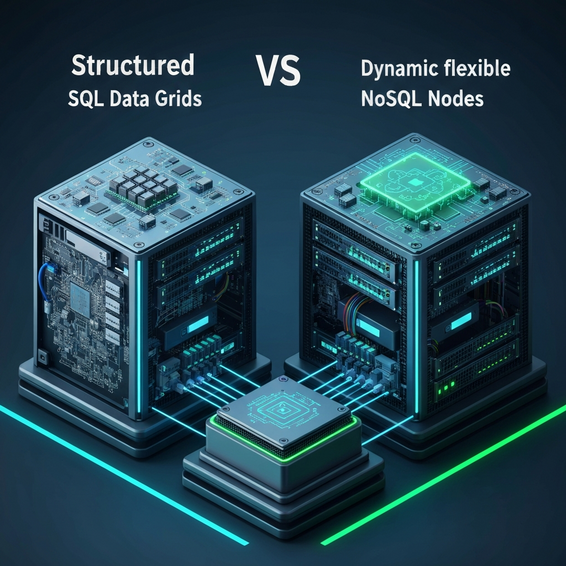
Neither option is universally “better”—they simply serve totally different purposes. Relational (SQL) databases excel at handling structured data that requires complex joins and strict data integrity (think financial software or banking apps). On the other hand, NoSQL databases shine when you need rapid development, hierarchical document storage, and effortless horizontal scalability (which is perfect for real-time big data applications).
Are cloud-native databases worth the cost?
For the vast majority of modern businesses, the answer is a resounding yes. It might seem cheaper at first glance to run your own open-source databases on bare-metal servers. However, managed cloud-native solutions drastically cut down the operational headaches of manual backups, endless patching, managing high availability, and scaling. Ultimately, they save you massive amounts of expensive engineering time.
Conclusion
At the end of the day, picking the right tech stack is a foundational choice that will echo through everything from your developer velocity to the final end-user experience. Fully grasping the technical nuances between relational models, NoSQL setups, and distributed systems is absolutely essential if you want to build resilient, future-proof software.
By taking the time to carefully evaluate your data models, map out your scaling requirements, and assess your team’s expertise, you can confidently zero in on the best databases for modern applications. Just remember to take advantage of managed services whenever you can, implement aggressive connection pooling, and always keep a watchful eye on your indexing strategies. Doing so will ensure your applications remain blazingly fast, no matter how much they scale.
About the Author