Docker Automation for Development Environments: Full Guide
We’ve all heard the dreaded “it works on my machine” excuse—usually right before a major software release. When you rely on manual setups for local dev environments, you’re practically inviting broken dependencies, annoying misconfigurations, and hours of needless debugging. Fortunately, rolling out robust docker automation for development environments is the ultimate way to eliminate these frustrating pipeline bottlenecks for good.
Standardizing dependencies across your entire engineering team does more than just save time. It empowers your developers to do what they do best: write actual code instead of wrestling with infrastructure. When done right, proper Docker containerization takes incredibly complex, multi-tiered application architectures and turns them into reliable, one-click local deployments.
In this comprehensive guide, we’re going to break down exactly how you can master Docker automation. We’ll cover everything from actionable quick fixes for everyday container headaches to advanced orchestration workflows, rounding out with the critical best practices you need to optimize both performance and security.
Why Docker Automation for Development Environments is Crucial
You might be wondering why standard local setups fail so frequently. The reality is that without containerized development, slight variations in operating systems can quickly spiral into severe dependency conflicts. Whether your team members are typing away on macOS, Windows, or a Linux distribution, they are inevitably bound to clash over mismatched library versions and missing system packages.
On top of OS differences, manual configuration leaves the door wide open for human error in your daily workflow. Because of a machine’s unique history, one developer might install a slightly different version of Node.js, Python, or PostgreSQL than their peer. That subtle inconsistency is exactly what breaks your code the moment it moves to staging or hits production servers.
Another major culprit behind environmental drift is undocumented variables. When a local setup lacks a single, centralized source of truth for configuration, it’s far too easy for critical application secrets and database connection strings to slip through the cracks. The end result? Broken database links, sudden crashes, and a lot of head-scratching.
Embracing docker automation for development environments completely wipes out this environmental drift. Because the runtime is fully isolated inside a container, you can guarantee that the application will behave exactly the same way on a junior developer’s laptop as it does on your live production clusters.
Quick Fixes: Basic Docker Automation Solutions
If you’re looking to quickly roll out basic docker automation for development environments, your absolute first step should be crafting a well-structured Docker Compose setup. Getting this right means you can effortlessly launch your entire application stack in a matter of seconds.
To get your local container environment fully automated, try following these foundational, highly actionable steps:
- Create a precise Dockerfile: Be intentional about your base image. Rather than adding bloated packages, install only the dependencies you actually need, define your working directory clearly, and expose just the essential application ports.
- Implement Docker Compose: Tie your frontend UI, backend APIs, and database services together using a single
docker-compose.ymlfile. This lets you spin up every interconnected service concurrently. - Utilize dynamic volume mounts: Map the source code directory on your local host directly to the container. Doing this enables instantaneous hot-reloading, meaning your code changes show up immediately without forcing you to rebuild the image every single time.
- Centralize environment files: Keep your environment-specific variables and local credentials neatly organized in a
.envfile. From there, just instruct Docker Compose to load them automatically the moment it starts up.
Beyond the initial configuration, writing a basic script to tear down and rebuild these environments will save your team countless engineering hours. For example, creating a simple Makefile that wraps the docker-compose up -d --build command delivers an incredibly smooth, intuitive experience for every developer on the project.
Advanced Solutions for Dev Automation
Once you have a solid baseline in place, it’s time to shift your focus toward advanced workflows that can scale alongside your architecture. After all, managing complex microservices demands robust DevOps tooling and deeper orchestration integrations if you want to maintain a rapid deployment speed.
One incredibly powerful technical technique to implement is multi-stage builds. This clever approach shrinks your Docker image footprint drastically by separating heavy build tools from the much lighter runtime environment. As a result, your smaller images will pull faster over the network while chewing up significantly fewer local system resources.
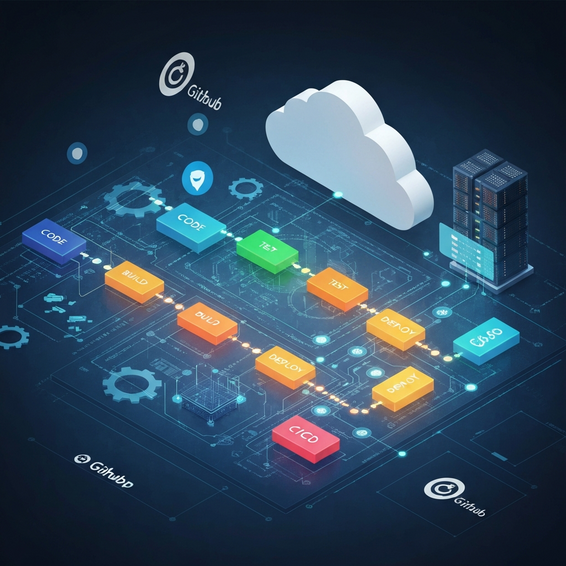
Next, you’ll want to bridge the gap between your local setups and your continuous integration pipelines. Tools like GitHub Actions, GitLab CI, or Jenkins are fantastic for automating docker builds both locally and remotely. You can even configure pre-commit hooks that automatically spin up temporary containers, execute your test suites, and tear themselves down before allowing any code to merge.
If you’re running a modern engineering team, leveraging Dev Containers (specifically VS Code Remote – Containers) is nothing short of a massive game changer. This tech binds your IDE directly into the running Docker environment. By completely isolating your workspace, you guarantee absolute environment parity while fully automating the installation of essential linting tools and IDE extensions.
Finally, think about introducing a local reverse proxy—like Traefik—into your docker-compose workflows. Doing so automates your local DNS routing, which means your developers can access services using clean URLs like api.app.localhost rather than constantly juggling a dozen conflicting local port numbers.
Best Practices for Containerized Development
Setting up an automated environment is only half the battle; maintaining its high performance and security requires strict optimization. You really need to start treating your Dockerfiles and Compose configurations as critical infrastructure-as-code artifacts, rather than just post-development afterthoughts.
Keep these essential DevOps best practices in mind to truly supercharge your daily workflow:
- Optimize your layer caching: Be strategic about the order of your Dockerfile commands. Always copy your requirements files and install dependencies before you copy over your frequently changing dynamic source code.
- Implement the .dockerignore file: Stop large, unnecessary directories—like
node_modulesor.git—from bloating your build context. Utilizing a.dockerignorefile speeds up the build daemon immensely. - Enforce non-root execution: You should never run your development containers as the root user. Instead, create a dedicated user inside the Dockerfile to sidestep severe security vulnerabilities and annoying local file permission conflicts.
- Utilize health checks: Bake
HEALTHCHECKinstructions right into your containers. This ensures that dependent services patiently wait in a pending state until your database container is fully initialized and genuinely ready to accept connections.
Focusing heavily on these docker image optimization steps will drastically slice down your initial build times. Ultimately, fast and reliable feedback loops are the absolute cornerstone of incredible developer productivity.
Recommended Tools and Resources
Getting the most out of your setup means choosing the right supporting ecosystem. The following tools offer exceptional value for both software engineers and DevOps professionals who want to smoothly scale their automated environments.
- Docker Desktop: This remains the standard, go-to graphical user interface for easily managing local containers, images, volumes, and lightweight Kubernetes clusters.
- OrbStack: If you’re on macOS, this is a lightning-fast, highly optimized drop-in replacement for Docker Desktop. It operates on minimal CPU and memory while dramatically speeding up local volume mounts.
- Portainer: An outstanding, lightweight management UI designed specifically for Docker environments. It’s perfect for visual debugging and quickly inspecting container logs.
- Visual Studio Code Dev Containers: A must-have extension from Microsoft that allows for seamless, fully isolated containerized development straight from your primary code editor.
- Watchtower: A highly specialized utility that takes the busywork out of updates by automatically refreshing running Docker containers the moment a new image hits your local or remote registry.
Frequently Asked Questions (FAQ)
What exactly is Docker automation for development environments?
It is the systematic process of using Docker’s suite of tools to script, orchestrate, and automatically deploy software development setups. This method guarantees identical, easily reproducible environments across all your engineers’ host machines, completely removing manual configuration steps from the equation.
Does using Docker slow down local development?
If it isn’t configured correctly, Docker can definitely cause file system delays—especially when dealing with volume mounts on macOS and Windows. However, by leveraging proper host volume caching strategies, streamlined images, and alternative engines like OrbStack, containerized development actually feels incredibly fast.
How do I automate Docker builds locally?
You can effectively automate local builds using a clever combination of docker-compose.yml configurations, localized Makefile scripts, or custom local Git hooks. These tools work seamlessly together to automatically trigger container rebuilds any time your source files or package dependencies undergo changes.
What is the difference between a Docker container and a traditional virtual machine?
Traditional virtual machines have to run a complete, often bloated guest operating system on top of a hypervisor, which makes them resource-heavy and incredibly slow to boot. Docker containers, on the other hand, directly share the host machine’s OS kernel, making them significantly lighter and much faster.
How do I handle database data persistence in automated local containers?
To ensure you don’t lose crucial data when tearing down your automated environment, you should declare named volumes within your Docker Compose file. A named volume safely stores your database’s data files independently of the container’s lifecycle, guaranteeing that your test data sticks around.
Conclusion: Streamlining with Docker Automation for Development Environments
Transitioning your engineering team to utilize docker automation for development environments is arguably one of the highest-ROI investments any technical organization can make. It entirely eradicates the age-old “it works on my machine” dilemma and massively accelerates the onboarding process for new developers.
By rolling out basic quick fixes—like strategic volume mounting—and eventually adopting advanced features such as Dev Containers and automated reverse proxies, you’ll see a dramatic improvement in daily workflow efficiency. Just remember to consistently prioritize docker image optimization, secure layer caching, and lightweight base images to keep your system overhead exceptionally low.
There’s no better time to start standardizing your local infrastructure. Go ahead and build your first optimized, multi-stage Dockerfile, configure your automated compose workflows, and immediately experience the undeniable power of a frictionless, fully containerized dev environment.
About the Author