7 Best Productivity Tools for Software Engineers (2024)
Your time is your most valuable asset as a developer. Even so, it’s incredibly easy to get bogged down by repetitive chores, endless context switching, and those marathon debugging sessions. Tracking down the best productivity tools for software engineers can completely transform your daily routine, taking it from feeling chaotic to running like a well-oiled machine.
Let’s face it: optimizing your developer workflow is no longer just a nice-to-have; it’s a strict requirement. It doesn’t really matter if you’re writing lightweight scripts, wrangling databases, or building complex cloud architectures. Putting together the right toolkit will easily save you hours of frustration week after week.
In this guide, we’ll look at the real reasons behind common developer bottlenecks and explore how to fix them using both quick wins and advanced strategies. Finally, we’ll dive into the top tools you actually need to streamline your project management and daily code generation.
Why You Need the Best Productivity Tools for Software Engineers
Even seasoned developers run into productivity walls. More often than not, the root cause is a highly fragmented toolchain combined with constant context switching. Bouncing back and forth between your IDE, terminal, browser, and project management apps naturally drives up your cognitive load, making it incredibly tough to lock into a focused flow state.
On the technical side of things, lacking proper infrastructure automation and relying on manual testing environments are huge time sinks. Whenever your build process takes forever, or your local setup looks nothing like production, you end up wasting valuable coding hours on mundane troubleshooting.
Tool sprawl is another major culprit. When engineering teams pile on too many specialized platforms without connecting them properly, developers wind up spending more energy managing the software than actually writing code. Effective time management means pulling those fragmented pieces together into one unified, streamlined pipeline.
Quick Fixes and Basic Solutions for Developer Workflows
Before jumping straight into enterprise-grade setups, it makes sense to optimize your local environment first. Making a few small tweaks can trigger massive improvements in your daily output while cutting way down on mental fatigue.
- Master Your IDE Shortcuts: The absolute fastest way to write code is to keep your hands glued to the keyboard. Take the time to memorize essential shortcuts for VS Code, IntelliJ, or whatever environment you prefer. Ditching the mouse can easily shave hours off your workweek.
- Use Snippet Managers: Stop typing out the same boilerplate code over and over. Take advantage of built-in snippet managers to quickly generate repeatable blocks of code—whether you’re dropping in a React component or structuring a complex SQL query.
- Implement a Clipboard Manager: A solid clipboard history tool lets you instantly access text, commands, and code blocks you copied hours ago without having to dig up the source. Apps like Maccy or Ditto are absolute game-changers for this.
- Organize Workspace Windows: Rely on window management tools to keep your terminal, browser, and code editor locked into predictable locations. This cuts out the visual clutter and time spent searching for the right window when switching tasks.
- Adopt the Pomodoro Technique: Deep focus is a requirement for good coding. Try using a timer app to work in focused 25 to 50-minute sprints, followed by a short break. It’s a remarkably simple way to prevent burnout and keep your concentration sharp.
Putting these basic habits into practice gives you a solid productivity baseline. If you’re looking for more insights on optimizing your core setups, definitely check out our DevOps tutorials for deeper integration ideas.
Advanced Solutions for Engineering Teams
For mid-level and senior engineers, simple local tweaks just aren’t enough to cut it. You need advanced, automated workflows capable of handling complex deployments, rapid scaling, and seamless collaboration across distributed teams.
Containerization and Reproducible Environments
The classic “it works on my machine” excuse is a massive productivity killer. Leveraging tools like Docker and DevContainers guarantees that your local environment behaves exactly like production. Not only does this wipe out environment-specific bugs, but it also makes onboarding new team members so much faster.
Automated CI/CD Pipelines
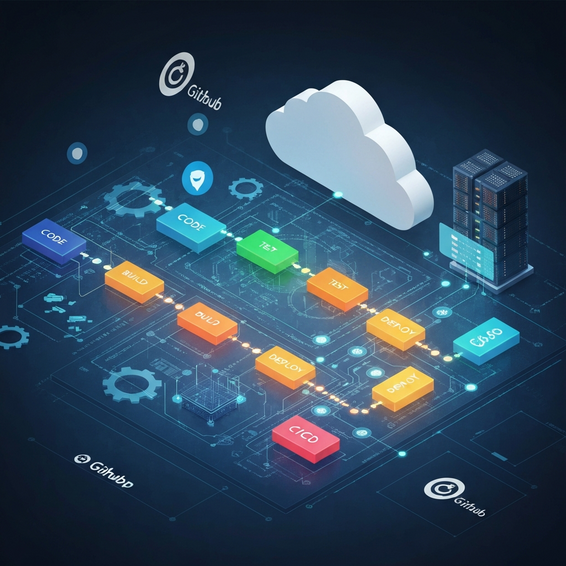
Continuous Integration and Continuous Deployment (CI/CD) pipelines completely automate the testing and deployment phases of your work. Platforms like GitHub Actions, GitLab CI, or Jenkins let you push code and instantly trigger a full suite of automated tests. That instant feedback loop ensures bugs are caught early in the development cycle, long before they ever reach production.
AI Code Generation and Review
Using AI as a developer is no longer a futuristic concept—it’s happening right now. Today’s advanced language models can write your unit tests, break down confusing legacy codebases, and suggest smart optimizations right inside your IDE. Handing off these repetitive tasks frees engineers up to focus on what really matters: high-level system architecture and complex problem-solving.
Advanced Database Management
It might be time to stop relying solely on the command line for deep database introspection. Switching to a robust GUI client lets you easily visualize schemas, execute complex joins with helpful autocomplete, and manage several different database engines from one unified screen. For backend and full-stack engineers, this kind of visibility is vital.
Best Practices for Developer Productivity
Of course, even the best tools won’t save you if poor habits are slowing you down. Stick to these best practices to maintain peak efficiency and top-notch security throughout your workday.
- Automate Everything: As a general rule, if you have to do something more than three times, write a script for it. Use Python, bash, or Makefiles to tackle routine database migrations, spin up local servers, or scaffold new projects.
- Enforce Clean Code Standards: Rely on automated formatters and linters (like Prettier, ESLint, or Black) and set them up as pre-commit hooks. This quietly eliminates those endless stylistic debates during code reviews and keeps your codebase perfectly consistent without any manual effort.
- Prioritize Asynchronous Communication: Protect your time by limiting real-time interruptions. Mute non-essential Slack pings and lean heavily on detailed Jira tickets or GitHub issues to manage your workflow. Truly deep work demands uninterrupted time.
- Secure Your Secrets: Never, ever hardcode API keys. Instead, use environment variables paired with secure vault managers like AWS Secrets Manager or HashiCorp Vault. Doing this boosts your security posture and avoids catastrophic leaks that take hours (or days) of damage control to fix.
- Embrace Test-Driven Development (TDD): Writing your tests before writing the actual logic might feel slow at first, but it speeds up development in the long run. It gives you a clear objective right from the start and significantly cuts down on regression bugs later.
Sticking to these habits ensures that your entire toolchain stays a powerful asset rather than slowly turning into a technical liability.
Recommended Best Productivity Tools for Software Engineers
If you’re looking to maximize your efficiency, here is a curated list of the absolute best productivity tools for software engineers. Consider weaving a few of these into your daily workflow.
1. Raycast (Mac Users)
Raycast is an incredibly fast, highly extendable launcher designed to completely replace your standard search bar. It allows you to manage GitHub pull requests, test out APIs, convert JSON, and run terminal scripts—all without your fingers ever leaving the keyboard. It is a fantastic way to cut down on context switching and reduce your mouse usage.
2. GitHub Copilot
Leading the charge in developer AI, GitHub Copilot essentially acts as your personal AI pair programmer. By analyzing your comments and surrounding context, it suggests entire lines or even full blocks of code. This dramatically speeds up the initial drafting phase and saves you from doing dozens of Stack Overflow searches.
3. Notion
Notion serves as an excellent central workspace for engineering wikis, detailed sprint planning, and system architecture documentation. Thanks to its flexible, block-based design, your team can easily build custom databases, kanban boards, and task trackers that perfectly match your specific agile workflows.
4. Warp Terminal
Built with Rust, Warp is a thoroughly modern terminal designed for the 21st century. It brings IDE-like text editing directly to your command line, along with built-in AI search to help you remember complex commands. With added collaborative features for teams, Warp makes terminal usage feel highly intuitive and genuinely efficient.
5. Docker
When it comes to containerization and creating isolated environments, Docker remains the undisputed industry standard. It guarantees that your applications will run smoothly no matter the underlying operating system, beautifully unifying your development, testing, and production phases into one cohesive experience.
6. Postman
If you work with APIs regularly, Postman is simply indispensable. It gives you a visual interface to build, test, and debug your API requests effortlessly. Beyond that, you can automate your API testing and even generate documentation directly from your successful calls, saving you countless hours of manual writing.
7. Obsidian
For managing your personal knowledge base, Obsidian has quickly become a favorite among technical professionals. It relies on local Markdown files to help you build a highly connected web of notes. Not only is it incredibly fast and privacy-focused, but it’s also the perfect space to keep track of intricate system architectures and reusable code snippets.
Frequently Asked Questions (FAQ)
What are the best productivity tools for software engineers?
The top contenders usually include an intelligent IDE (think VS Code or JetBrains IntelliJ), a helpful AI assistant (like GitHub Copilot), a modern command-line interface (such as Warp), and a reliable CI/CD pipeline (like GitHub Actions). Naturally, your ideal stack will depend heavily on your specific role, the languages you code in, and your current infrastructure.
How does AI improve developer productivity?
AI tools provide a massive boost by automating boilerplate code generation, predicting your next few lines of code, and even writing out comprehensive unit tests. They can also instantly explain dense legacy functions. Ultimately, AI handles the tedious syntax work so developers can focus all their energy on architecture and core business logic.
Is it worth paying for premium developer tools?
Absolutely. If a premium tool saves you even a few hours a month, the return on investment easily pays for the subscription cost. Any tool that removes friction, accelerates your output, and lowers your mental fatigue is going to be a worthwhile investment for a serious engineering professional.
How can I reduce context switching while coding?
Try using a keyboard-driven launcher like Raycast, set up multiple monitors (or well-organized virtual desktops), and route your project management alerts directly into your IDE. By cutting down the time you spend blindly tabbing through different applications, you’ll find it much easier to maintain a steady, productive flow state.
Conclusion
Discovering and mastering the best productivity tools for software engineers is definitely an ongoing journey, but the payoff is incredible. Once you understand the root causes behind your workflow bottlenecks and start applying both basic tweaks and advanced technical solutions, you’ll see a dramatic improvement in your daily output—and ultimately, your career trajectory.
It helps to start small: optimize your IDE, learn those keyboard shortcuts, and install a reliable clipboard manager. From there, you can gradually introduce AI assistants, automated pipelines, and robust container tools into your routine. By equipping yourself with these powerful resources today, you’ll be able to take full control of your engineering productivity.
About the Author